



LIBERIA MEDICAL &
DENTAL ASSOCIATION
JOURNAL
The Liberia Medical & Dental Association Journal (LMDAJ) is owned and published by the Liberia Medical & Dental Association. All rights reserved.
Welcome to The Liberia Medical
& Dental Association Journal
The Liberia Medical & Dental Association Journal (LMDAJ) publishes contributions from medical researchers of scientific and educational interest to medical and dental practitioners and researchers as well as those in related disciplines, with special focus on medical practice and research in Africa and its peoples. The aim of this Journal is to provide a medium for international dissemination of research findings originating in Liberia, and the greater West African subregion, to promote cooperation amongst and between medical researchers in Africa and elsewhere. The Journal is published in English and French. Printed supplements are published upon arrangement with the Editor-In-Chief.
2026 Announcement!
A Call For Manuscripts!
The Editorial Board of the Liberia Medical and Dental Association Journal (LMDAJ) welcomes doctors, clinicians, researchers, and healthcare professionals from around the world to submit their manuscripts for consideration in our upcoming March '26 issue.
Latest Publications

Indication and outcome of Simple Prostatectomy- Multicenter Review
Background: Open prostatectomy for the surgical management of benign prostate hyperplasia (BPH) is now rarely used in most developed countries except for large prostates. However, in resource limited countries, open

Risk Factors for Surgical Site Infection following Elective Inguinal Hernia Repair at Jackson F. Doe Memorial Regional Referral Hospital: Prospective study of 161 patients
Background: Surgical site infection (SSI) is a common postoperative complication that causes significant morbidity and mortality, increases antibiotic usage, prolongs hospital stay, adds cost, and decreases patients’ quality of life

Dural Sinus Thrombosis in a 14year old girl – A Case Report
Dural sinus thrombosis is a rare but serious condition, especially in children, requiring a high level of suspicion for accurate diagnosis and timely treatment. We present the case of a

Commentary..
From The Editor
The resurgence of the Liberia Medical and Dental Association Journal in 2024 marks a significant milestone in our collective effort to address the pressing health challenges in Liberia and the broader West African region. This publication aims to serve as a beacon of knowledge, providing healthcare professionals with the latest research, insights, and discussions pertinent to our region’s unique health landscape. As we celebrate this return, it is imperative to draw attention to two interconnected and increasingly prevalent health issues: diabetes and kidney disease. – Professor Philip Zochonis Ireland, Editor-in-Chief, Liberia Medical and Dental Association Journal
Featured Multimedia
Varicocele and Infertility in African Men – A Systematic Review
Background: Infertility is a global problem. The region with the highest rate of infertility included Central and Eastern Europe and Australia. The incidence is thought to be much higher in Sub-Saharan Africa, but the data is challenged by under-reporting. Despite most men with varicocele being fertile, it is still the most common diagnosis in infertile males.
Objective: The objective of the study is to evaluate the role of varicocele repair in improving semen parameters and achieving spontaneous pregnancy by males with infertility and clinically palpable varicocele in SSA.
Methodology: A thorough systematic literature review was conducted from 1990 to 2022 using the various academic search engines: PubMed, Google Scholar, African Journal Online and Google. The English and French Literature was searched using the medical search heading (MEsH) Varicocele and Infertility in Male appended with the following indexes: Guidelines, Sub-Saharan Africa, Senegal, Liberia, Guinea, Ghana, Nigeria, Kenya, Uganda, Tanzania and Burkina Faso.
Results: there was a significant improvement in the semen parameters after varicocelectomy in SSA men ranging from 27.7% to 100% especially those with oligospermia. The mean pregnancy rate achieved in partners of SSA men after varicocelectomy was about 38.7%.
Conclusion: Conclusions drawn from several studies have shown significant improvement in semen parameter and spontaneous pregnancy after varicocele repair in amongst couples with infertility. Males with infertility, clinically palpable varicocele and abnormal semen parameter should be offered varicocele repair.
Dermonecrosis in a Neonate from Arachnid Envenomation
Envenomation by venomous creatures poses a significant threat, especially in home environments where identification may be challenging. We present a rare case of dermonecrosis in a neonate resulting from a brown recluse spider bite. The neonate presented with a painful red mark on the abdomen, leading to distress and necrotic skin lesions. Despite initial normal laboratory findings, management included intravenous fluids, antibiotics, wound dressing, escharotomy, and supportive care. The discussion highlights the characteristics of brown recluse spider venom, clinical manifestations, and management strategies. This case underscores the importance of prompt recognition and appropriate management of arachnid envenomation in neonates.
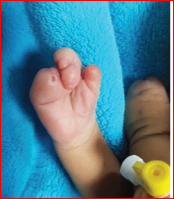
Digital Dysgenesis in a Preterm Infant Following Intrauterine Exposure to Misoprostol Coincidence or Association
This case report presents a preterm infant with digital dysgenesis following intrauterine exposure to misoprostol. The infant, born at 31 weeks of gestation, exhibited craniofacial anomalies and limb malformations consistent with misoprostol teratogenicity. The mother had a history of attempting termination of pregnancy with misoprostol during the first trimester. Despite resuscitative efforts, the infant succumbed to complications within one week of admission. This case underscores the potential teratogenic effects of misoprostol and highlights the importance of obstetric vigilance and counseling regarding its risks.
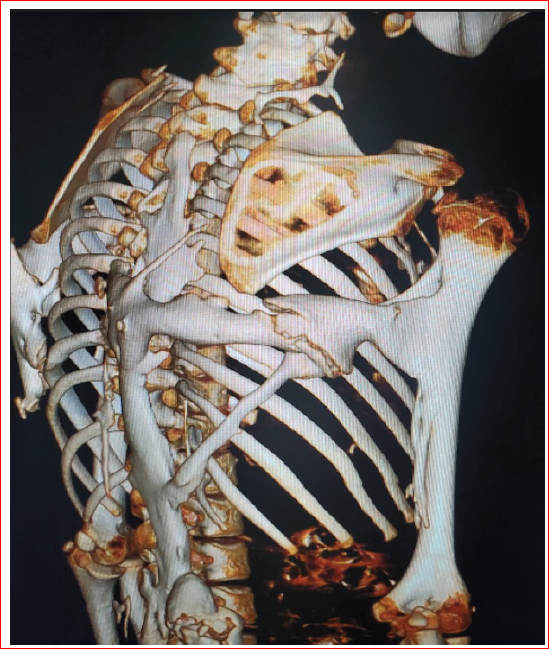
Extremely Unusual Case of Disabling Soft Tissue Ossification in Pediatric Patient
Debilitating ossifications in soft tissue is an extremely rare phenomenon in literature. Fibrodysplasia Ossificans Progressiva is a very unusual genetic disorder of Extra-Skeletal Bone formation mostly within muscle, tendons and fascia. Clinically it presents with extensive heterotopic ossification in soft tissue and malformations in greater Toe and Thumb. During the earlier stages, clinical presentations may mimic Myositis Ossificans, Scleroderma, Juvenile Fibromatosis, soft tissue sarcoma. But during the late phase, the differential Diagnosis is limited. Minor trauma and interventions will exacerbate the disease process and is not recommended.
Case presentation:
A case of 10 years old female patient who visited John. F. Kennedy Hospital Imaging Center, Monrovia, Liberia on April 4th, 2021, with a complaint of progressive anterior chest and posterior chest deformity and swelling in the back for more than three years. She has no past medical illness. No history of trauma recorded. Her symptoms were waxing and waning initially but become progressive six months before her presentation. On physical examination she had hard swelling on her back and anterior chest which has markedly affected the movement of her both arms. She also has short thumb and toe with deformity.
Plain CT-scan of the chest, abdomen and pelvis showed that she had extensive dystrophic ossifications in paraspinal area which had formed a pseudo-articulation with ossifications arising from both humerus along the postero-lateral aspect. There were also branching soft tissue ossifications from both sides of the anterior chest within the substance of the pectoralis muscles.
Conclusion and Limitation: Diagnosis of extremely rare genetic disorders is a challenge in developing countries where there is limitation of genetic studies, laboratory services and poverty. The introduction of CT scan at our imaging suite had greater impact in making our Radiological Impression.
High Cesarean Section Rate in a Tertiary Medical Center in Monrovia, Liberia: Trends, Indications, and Implications
Background
The escalating global rates of cesarean sections (C-sections) have raised concerns, with the World Health Organization recommending a rate of 10-15%. This study investigates the cesarean section rate, trends, indications, and potential causes at a tertiary medical center in Monrovia, Liberia.
Objectives
To determine the cesarean section rate, identify common indications, analyze trends, and explore factors contributing to the high rate.
Materials and Methods
A retrospective review of cesarean deliveries and other deliveries at John F. Kennedy Maternity Hospital, Liberia from January 2020 to December 2022 was conducted. Data on patient demographics, parity, booking status, and indications for C-section were collected and analyzed.
Results
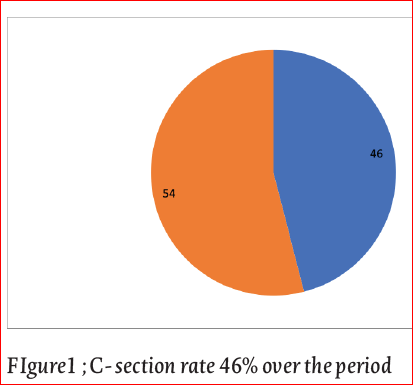
The cesarean section rate averaged 46% over the study period, with a slight decrease from 47% in 2020 to 45% in 2021, followed by a rise to 48% in 2022. The leading indication for C-section was cephalopelvic disproportion (CPD), followed by previous cesarean section and fetal distress. A majority of the patients were between 21-35 years old, and most deliveries occurred at term.
Conclusion
The high cesarean section rate at John F. Kennedy Maternity Hospital exceeds WHO recommendations and warrants attention. Possible contributing factors include referral patterns, fear of litigation, and increasing maternal risk factors. Strategies to address this trend should focus on active labor management, reducing high-risk pregnancies, and refining indications for C-section.
Infantile Hypertrophic Pyloric Stenosis in a Female Infant
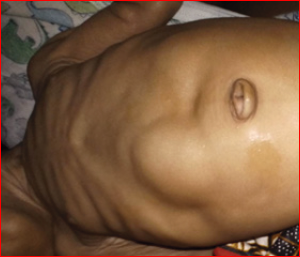
Infantile hypertrophic pyloric stenosis (IHPS) is a rare condition characterized by abnormal thickening of the pyloric muscles, predominantly affecting male infants. We present a case of IHPS in a female infant, the third of three siblings, who presented with typical symptoms of projectile vomiting and fever. Despite the rarity of this condition in our facility and its usual occurrence in male infants, prompt diagnosis and successful surgical intervention were achieved. This case underscores the importance of considering IHPS in the differential diagnosis of vomiting in infants, irrespective of gender, and highlights the significance of interdisciplinary collaboration in effective patient management.