



LIBERIA MEDICAL &
DENTAL ASSOCIATION
JOURNAL
The Liberia Medical & Dental Association Journal (LMDAJ) is owned and published by the Liberia Medical & Dental Association. All rights reserved.
Welcome to The Liberia Medical
& Dental Association Journal
The Liberia Medical & Dental Association Journal (LMDAJ) publishes contributions from medical researchers of scientific and educational interest to medical and dental practitioners and researchers as well as those in related disciplines, with special focus on medical practice and research in Africa and its peoples. The aim of this Journal is to provide a medium for international dissemination of research findings originating in Liberia, and the greater West African subregion, to promote cooperation amongst and between medical researchers in Africa and elsewhere. The Journal is published in English and French. Printed supplements are published upon arrangement with the Editor-In-Chief.
2026 Announcement!
A Call For Manuscripts!
The Editorial Board of the Liberia Medical and Dental Association Journal (LMDAJ) welcomes doctors, clinicians, researchers, and healthcare professionals from around the world to submit their manuscripts for consideration in our upcoming March '26 issue.
Latest Publications

V2 Lorem ipsum dolor sit amet, consectetur adipiscing elit
V2 Lorem ipsum dolor sit amet, consectetur adipiscing elit. Integer justo purus, sagittis vehicula dui sed, egestas porta ex. Proin nisi sem, gravida eget libero vitae, lacinia laoreet nisl. Mauris

Pattern of Long Bone Fracture at John F. Kennedy Memorial Hospital (2019)
Background: The pattern of fracture, including the etiology, types, anatomical location and age distribution, may differ from and within sub-regions due to inhabitants’ occupation and living environment. We aimed to
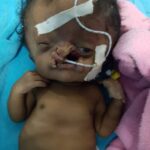
Extreme Facial Dysmorphism – Is this a Rare Case of Severe Fetal Alcohol Syndrome (FAS)?
Fetal Alcohol Syndrome (FAS) is a well-documented consequence of prenatal alcohol exposure, presenting with a spectrum of physical, developmental, and neurobehavioral abnormalities. We present a rare case of severe FAS
Commentary..
From The Editor
The resurgence of the Liberia Medical and Dental Association Journal in 2024 marks a significant milestone in our collective effort to address the pressing health challenges in Liberia and the broader West African region. This publication aims to serve as a beacon of knowledge, providing healthcare professionals with the latest research, insights, and discussions pertinent to our region’s unique health landscape. As we celebrate this return, it is imperative to draw attention to two interconnected and increasingly prevalent health issues: diabetes and kidney disease. – Professor Philip Zochonis Ireland, Editor-in-Chief, Liberia Medical and Dental Association Journal
Featured Multimedia
V2 Lorem ipsum dolor sit amet, consectetur adipiscing elit
V2 Lorem ipsum dolor sit amet, consectetur adipiscing elit. Integer justo purus, sagittis vehicula dui sed, egestas porta ex. Proin nisi sem, gravida eget libero vitae, lacinia laoreet nisl. Mauris pulvinar lorem purus, a mattis massa malesuada scelerisque. Quisque non metus velit. Fusce sagittis tortor velit, sed ultricies tortor imperdiet ac. Integer pellentesque cursus mauris sit amet egestas. Integer a porttitor lorem. Duis malesuada, dui id accumsan pretium, ante enim bibendum eros, non faucibus erat enim a dolor. Maecenas et tellus quis erat condimentum scelerisque. Suspendisse potenti.
Cras tincidunt eros odio, ac facilisis enim congue non. Ut at arcu a turpis hendrerit lacinia. Nullam et lacinia nisi. Donec nec consectetur justo. Mauris sagittis libero vitae justo efficitur pharetra. Quisque ac rutrum erat. Aenean ut lorem purus. Etiam molestie diam ut lectus hendrerit dignissim. In nec justo a diam fringilla viverra eleifend pharetra metus. Morbi placerat bibendum faucibus. Integer vel feugiat lectus, vitae hendrerit mi. Fusce condimentum sagittis pharetra. Morbi gravida velit eros, eleifend interdum felis lobortis et. Morbi sem ante, finibus et semper non, eleifend vel diam. Nunc commodo cursus commodo.
Mauris non mi hendrerit, vehicula urna id, eleifend lectus. Proin aliquam, dui sed pharetra vulputate, nulla neque volutpat quam, nec ornare erat elit ac est. Nullam aliquam, nulla nec faucibus pharetra, leo odio vulputate eros, et elementum ante dui at nibh. Pellentesque felis odio, facilisis nec cursus non, rutrum in lorem. Nam eget enim tempus, aliquam ligula id, maximus massa. Sed sed leo dignissim, lacinia odio at, blandit mi. Donec ac ultricies nulla, nec porta sapien.
Nam sit amet faucibus quam, non convallis mauris. Integer sit amet faucibus risus. Vivamus vel venenatis sem. Duis hendrerit, magna et malesuada iaculis, est augue mollis justo, ac tempus tortor eros sed ante. Fusce blandit vel nulla at euismod. Duis elementum sem vitae tristique eleifend. Cras id nisl ultricies, fermentum enim id, dignissim sapien. Mauris maximus metus finibus risus faucibus, ut pellentesque turpis tincidunt. Mauris risus ante, fermentum sed urna vel, dictum vulputate lacus.
Duis scelerisque lacus ac justo feugiat, a facilisis ligula blandit. Ut sollicitudin enim vel tellus pulvinar faucibus. Nulla facilisi. Praesent ornare sollicitudin augue. Donec in nibh nisi. Nam sollicitudin a massa nec blandit. Donec efficitur orci pulvinar egestas placerat. Vestibulum porta nisi massa, sit amet volutpat est euismod ac. Vivamus in ultricies dui, vitae elementum neque.
Etiam dictum lectus semper magna ullamcorper, vel tempor dolor pulvinar. Etiam a nunc tincidunt, tincidunt ex a, faucibus orci. Nullam sed nunc auctor, mollis ex id, faucibus ligula. Maecenas eleifend odio dignissim tortor malesuada mollis. Etiam iaculis ultrices ligula vel convallis. Phasellus mollis ultrices lorem sit amet tincidunt. Aliquam ligula mi, efficitur pretium scelerisque in, ullamcorper quis mauris. Maecenas turpis tortor, aliquam vel interdum in, interdum non nulla. Donec sit amet consectetur nisi. Duis sit amet volutpat odio.
Pattern of Long Bone Fracture at John F. Kennedy Memorial Hospital (2019)
Background: The pattern of fracture, including the etiology, types, anatomical location and age distribution, may differ from and within sub-regions due to inhabitants’ occupation and living environment. We aimed to determine the pattern of long bone fractures seen through the trauma unit at the John F. Kennedy Memorial Hospital.
Methods: A retrospective study of patients with long bone fractures of the extremities at the John F. Kennedy Memorial Hospital over a period of 12 months between January 2019 to December 2019.
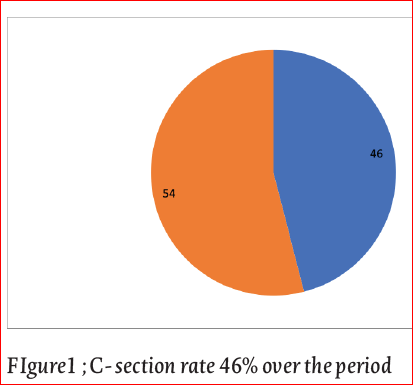
Results: 233 patients with long bone fractures were recruited. The resulting data was analyzed using Prism 8. Patients ages range from 4-100 years with a mean age of 38.5 years, and 18-59 years (192/233, 82.4%) being the most affected age group. There was male preponderance with male to female ratio of 2.3:1. Of the 233 fractures, 169 (72.6%) were as a result of road traffic accidents (RTA), 38 (16.4%) due to fall from heights and 26 (11.2%) from assault and pathology. Femur, tibia and tibio-fibula were the topmost three anatomical locations involved. 108 (46.4%) of all fractures were open while 125 (53.6%) were closed fractures. Eighteen had multiple associated injuries with head injury being the topmost associated injury.
Conclusion: Fractures of the lower extremities constitute the common anatomical location among the population studied. Road traffic accidents still remain one of the most prevalent etiology. Age group between 18- 59 are commonly affected. This confirms the vulnerability of the young and working population as well as poor traffic regulations in Liberia.
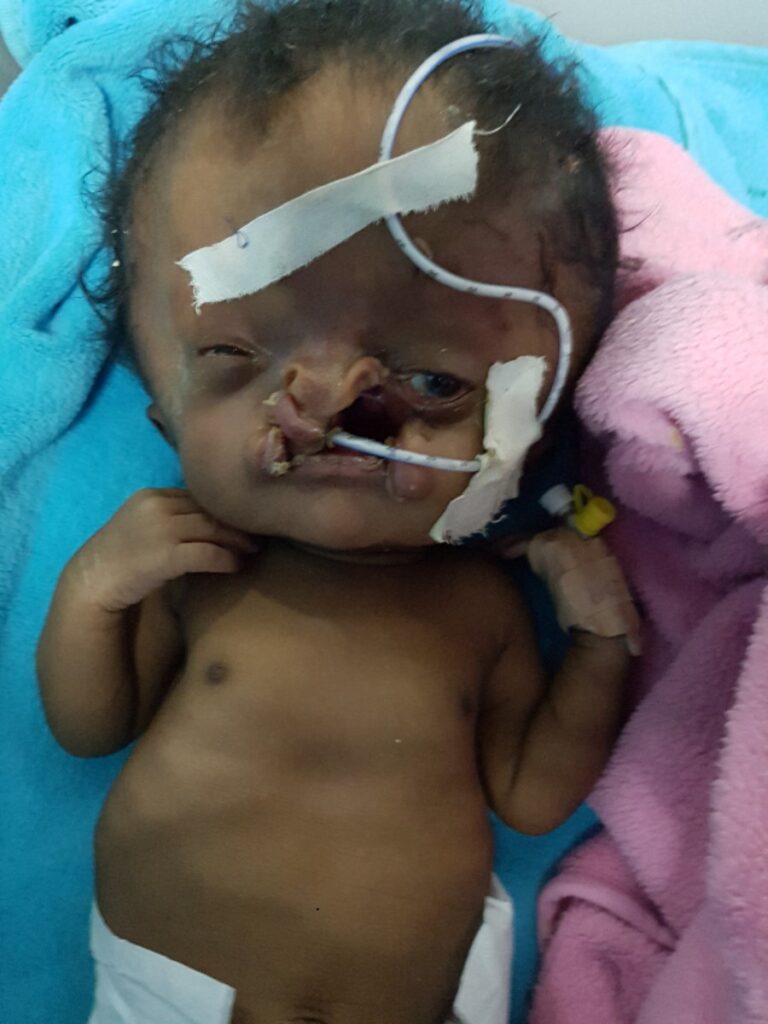
Extreme Facial Dysmorphism – Is this a Rare Case of Severe Fetal Alcohol Syndrome (FAS)?
Fetal Alcohol Syndrome (FAS) is a well-documented consequence of prenatal alcohol exposure, presenting with a spectrum of physical, developmental, and neurobehavioral abnormalities. We present a rare case of severe FAS characterized by extreme facial dysmorphism in a neonate born to a mother with chronic alcohol consumption during pregnancy. The infant exhibited marked craniofacial disproportion, low-set ears, hypertelorism, and macrocephaly. The mother consumed locally brewed sugarcane liquor throughout pregnancy, contributing to the observed teratogenic effects. This case underscores the urgent need for public health interventions and education to mitigate the risks associated with alcohol use during pregnancy.
Level of Knowledge regarding Intravenous Fluid Therapy among Nurses at Jackson Fie Doe (JFD) Hospital, Nimba County, Liberia
Background: Nearly all patients receive intravenous therapy during hospital stay, and as nurses play a pivotal role in administering of Intravenous fluids, their knowledge of intravenous therapy is critical in promoting patient safety and preventing complications for positive patient outcomes.
Objective: We assessed the level of nurses’ knowledge regarding Intravenous fluid therapy at Jackson F. Doe memorial regional referral hospital (JFD).
Methods: An institutional based cross-sectional study was conducted using pretested, semi-structured, self-administered questionnaire among 46 nurses working at Jackson F. Doe hospital. The data was analyzed using SPSS version 20 (independent T-test and ANOVA were used for inferential analysis).
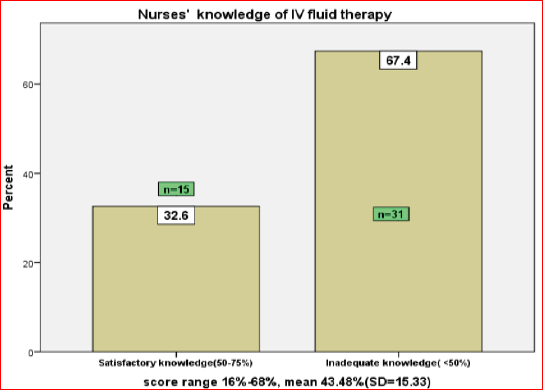
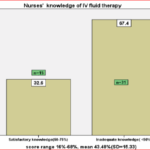
Results: The mean knowledge score on intravenous fluid therapy (IVT) among nurses was 43.48± 15.33%, depicting inadequate knowledge. Satisfactory knowledge on intravenous fluid was seen in 22.6% while 67.4% of nurses had inadequate knowledge. Highest knowledge deficiency was observed on ionic composition of fluids, indication of commonly available fluids, monitoring parameters of patients’ fluid status, complication of IVT and its preventive measures. Statistically significant association was present between mean knowledge score and gender (p=0.046) and years of experience (P=0.038).
Conclusion: Level of knowledge of intravenous fluid therapy among nurses is inadequate. Continuous education and training of nurses on IVT should be conducted regularly to improve their knowledge and consequently, the quality of patient care. Further research using observational checklist to assess nurses’ practice during intravenous fluid therapy is needed.
Indication and outcome of Simple Prostatectomy- Multicenter Review
Background: Open prostatectomy for the surgical management of benign prostate hyperplasia (BPH) is now rarely used in most developed countries except for large prostates. However, in resource limited countries, open prostatectomy remains the main mode of surgical management of benign prostate hyperplasia irrespective of the prostate size. Surgical treatment is reserved for refractory cases, as well as cases involving recurrent urinary retention, recurrent urinary tract infection, recurrent hematuria, bladder calculi or upper urinary tract involvement. The study highlights the surgical management of BPH using open simple prostatectomy with emphasis on indication and outcome.
Methods: This is a 5-year retrospective descriptive study performed at the 2 Referral Hospitals from 2018 to 2023.
Results: 60 patients were reviewed following simple prostatectomy. The age range was 55 years to 78 years with a mean age was 65.1 years. The mean preoperative hemoglobin was 11.6 g/dl. The age range was 55 years to 78 years with a mean age was 65.1 years. The mean preoperative hemoglobin was 11.6 g/dl. The perioperative transfusion rate was 27/60 (45%). BPH and Chronic urinary retention was the commonest indication for surgery which was 16/60 (26.6%) of all cases. About 45/60 (75.0%) of the procedures were performed through the transvesical approach. Systemic hypertension 31/60 (51.7%) was the commonest comorbidity. The data showed a strong correlation between patients with indwelling catheter before surgery and surgical site infection 9/13 (69.2%).
Conclusion: In the absence of endourological procedures, simple prostatectomy is broadly performed for all sizes of prostate. The postoperative morbidity is high, but the outcome is acceptable.
Risk Factors for Surgical Site Infection following Elective Inguinal Hernia Repair at Jackson F. Doe Memorial Regional Referral Hospital: Prospective study of 161 patients
Background: Surgical site infection (SSI) is a common postoperative complication that causes significant morbidity and mortality, increases antibiotic usage, prolongs hospital stay, adds cost, and decreases patients’ quality of life and has a high disease burden in developing countries.
Objectives: The purpose of this study was to assess the incidence of SSI and to identify risk factors for surgical site infection rate among clean open hernia repair.
Methods: Non-matched Prospective randomized study was conducted using pretested structured questionnaire among 161 patients undergoing elective inguinal hernia repair at Jackson F. Doe Referral Regional Hospital, Lower Nimba/ Liberia from July 2016 to February 2017.
Results: With one month follow-up, there were 19 and 7 superficial and deep surgical site infections respectively making an overall surgical site infection rate of 26(16.15%) among the study groups, with the majority (88.46%) being detected postoperatively after discharged. The rate of surgical site infection was analyzed by patient characteristics and peri-operative variables. Analysis identified two from patient characteristics and three from peri-operative variables correlating to the occurrence of SSI; Inguino-scrotal hernia (AOR=4.40, CI:1.44-13.48, p=0.009), Blood group AB (AOR=7.03, CI:1.35-36.65, p= 0.021), Povidone iodine for skin preparation (AOR=3.71, CI:1.09-12.61,p=0.035), duration of surgery >60 min(AOR=3.34, CI=1.25-8.96, p=0.017), Residents/ medical officer(AOR=4.57, CI:1.28-16.29, p= 0.019). The mean total hospital stay was also significantly longer in patients with wound infection (p=0.0001)
Conclusion: This study identified high rates of surgical site infection. This study calls that all risk factors should be regarded as potential indicators of SSI and effective and relevant preventive measures should be taken to reduce SSI and improve outcomes.